Domain A: Planning & Preparing for Student Learning
A1. Demonstrating subject matter knowledge and PCK
The teacher demonstrates an understanding of subject matter and subject-specific pedagogy during planning.
Identifies important concepts and understandings to be learned.
Evidence: During all math lessons, I review with the students what the essential question(s) is(are) for that specific lesson.
Justification: I believe that students should be aware of what they are learning - and I think reviewing the essential question(s) is a perfect way to do so. It may be that they don't understand how to answer the question yet, but the student's should be learn by the end of the lesson what the answer could be or what the question could mean. For example, in Go Math! Chapter 4, Lesson 3, the essential question is "How do you break apart addends to add tens and then add ones?" This particular lesson built off the previous as well as previous chapter's learnings of how to break apart equations into different ways - i.e., 34 is the same as 30+4.
Articulates connections among concepts, procedures, applications.
Evidence: As mentioned above, the lesson we did on Friday, December 2, 2016, Chapter 4, Lesson 3, the work required students to use prior knowledge to break apart numbers into addition problems.
Justification: In Chapters 1 and 2, we discussed place value and using tens and ones blocks to break apart numbers. For example, the number 34 would be 3 tens 4 ones, thirty-four, 30+4, etc. Students had to bring this prior knowledge to the table for Chapter 4, Lesson 3. For this particular lesson, we began with reading the essential question and started thinking about how to break down numbers to addition problems (34 = 30+4). The beginning of the lesson had students break apart numbers to refresh their memory. Then we delved deeper by breaking apart addition problems (see attachments to show how we did this, based off the workbooks).
Uses appropriate resources to deepen own subject matter understanding.
Evidence: I frequently use thinkcentral.org, Pinterest, and TeachersPayTeachers to deepen our understandings of lessons by trying to add variety for the students while also deepening their understandings of the lessons.
Justification: See attachment of lesson plan of review cooperative learning for Go Math! Chapter 2.
Anticipates potential for students missconceptions and difficulties with specific subject matter.
Evidence: Throughout the semester, I began learning what the misconceptions could be for the students and what they may not understand or what I may not be as clear with because of how far along in math understanding and learning I am. I began to start breaking down students responses, and this became significantly easier when I got to know the students better.
Justification: See attachment of lesson plan - there are bits and pieces of how I broke down my thinking further and how the students could respond to me potentially and how to react to that.
Plans for subject-specific technology applications, when appropriate.
Evidence: Every day, students use XtraMath.com and FrontRow Education application on iPads to further their understanding and fluency of basic facts as well as their understandings of the lessons and standards of the Common Core State Standards.
Justification: See attachment of scores and FrontRow assignments.
A2. Using learning principles to understand children
The teacher uses principles of learning and development, and understanding of learners and learner diversity during planning of instruction and assessment.
Considers and accommodates social, emotional, cognitive, and physical characteristics and needs of target learners in planning instruction.
Evidence: See attachment of lesson plan, under differentiated instruction.
Justification: I think that each student is an individual; be that they have an IEP or not, they all deserve to have individualized learning, even those who are in higher groups and those that are in lower groups. Every person deserves that one-on-one correspondence when needed. I think that students need to know that someone believes in them - which is something I try to show them every single day.
Ascertains and uses learner prior knowledge in planning instruction.
Evidence: Using my prior knowledge about my students, I plan lessons based on what help they still need for lessons.
Justification: For my cooperative learning review for chapter 2, I was able to use evidence of my student's knowledge and tests (such as mid-chapter checkpoints) to figure out what they were still struggling with. I was able to use Teachers Pay Teachers to come up with resources for them to use in their review centers, along with technology, so that they were able to continuously be engaged. I think it is very important to base lessons on students needs and interests because it's important to keep them engaged with the lesson. Cooperative-style learning is very important for them, so they can a) learn to work together with other students, b) learn to delve deeper into their studies, and c) help me to learn about each of them and what their needs are when they are learning.
Adapts lessons and materials for learner diversity and background.
Evidence: See attachment of lesson plan, under differentiated instruction.
Justification: I think every learner's needs should be met, even if they come from different backgrounds and have diverse learning needs. It can be hard to meet everyone's needs in a big classroom, but I think the best way to get to know each student is learning more about them, i.e., their family background (from them talking about it or parent-teacher conferences), or knowing about their interests. Knowing about their backgrounds and knowing their interests helps for them to know how to help them learn and ways you can get them involved. For example, Sierra once helped me write a word problem for math one day, and she used "minions" as her subject; this helped me to realize how to get them interested in the lessons.
A3. Using contextual factors in planning
The teacher uses relevant community, district, school, and classroom factors and characteristics in planning.
Considers community and school opportunities and challenges.
Evidence: I have, on-the-spot, taught the schoolwide positive behavior program lesson. When my mentor was absent, I was required to one morning take over and work through the lesson with students. (See attachment)
Justification: While it was already provided (see attachment), I had to scaffold the information down to a place where students would be engaged in the lesson. The students were fairly engaged and volunteered their answers. It was nice to see that they really cared about the information being given to them. I have never been aware of any schoolwide behavior pan before, so it was really interesting to see how involved the kids were and how much they truly cared about something that impacted them. It was definitely something they respected, and it was awesome to see their reactions. I think this is one of the many benefits at Standing Stone Elementary School, in Huntingdon, PA.
Customizes lessons for a specific classroom of students.
Evidence: See attachment of proposal.
Justification: During my planning of my science unit's proposal, I not only collaborated with professors for ideas, I also used the district's standards and curriculum to do my planning. Throughout the lessons, I will be using Huntingdon as an example of an ecosystem and what the characteristics are/what makes up that ecosystem. Knowing my students, I know they get very excited about something out of the ordinary, which, unfortunately, science is out of the ordinary for them. I know that they are really excited about science from our *failed* rock candy experiment.
A4. Developing appropriate instructional goals
The teacher develops and selects appropriate instructional goals and objectives.
Develops clear goals written in the form of student learning outcomes.
Evidence: See biological unit - lesson 1.
Justification: Throughout my time at Standing Stone, I have been able to identify better SLOs (student learning outcomes). With SSED last spring, I was able to really learn what a great SLO was and what would best benefit each of my students. I have been known to take risks and really try new things with the students, and I know now from working with my students that they love when I take risks and respond positively to the risks. I really focused in during my proposal what would best benefit my students when learning about biological evolution - and I think that using my resources from last semester and this semester really helped me to develop a great unit for the kiddos in my classroom that kept them engaged.
Develops learning goals that account for learner diversity and are challenging for all learners.
Evidence: See biological unit - lesson 1.
Justification: Again, during my biological evolution unit, I was able to really focus in on what would best benefit my students while also focusing in on hitting all the standards. I think I successfully did this during my first lesson, simply because they were very engaged in the lesson, got to choose their own book, but also showed understanding of the book and were able to come up with items to add to the whole-class KLEWS chart, which is attached. The lesson required students to choose books for themselves on an app called Epic! and reflect on what they learned from the book, on a KWL chart. This helped scaffold for the students so they were able to give me information for our whole-class KLEWS chart.
Develops goals that are achievable and permit measurable methods of assessment.
Evidence: See Go Math! lessons attachments.
Justification: I think that using the lessons from Go Math! series really helped me to learn how to come up with goals that were achievable and measurable through assessment. I think that the teacher's manual really explained and broke down what was necessary for my students to learn. While Go Math! as a series is not very helpful in engaging students and explaining things the best way, it helped me to really learn more about what goals needed to be in place for the students to learn and achieve the standards set in place by Common Core State Standards.
Builds lessons that are based on appropriate local, state, and/or national academic standards.
Evidence: See proposal attachment.
Justification: For my proposal, I focused closely on the local, state, and national academic standards for science. This was somewhat difficult because of the fact science isn't always a part of the curriculum in second grade. However, I found, through using the FOSS kit provided by Standing Stone, that I was able to come up with standards using NGSS (Next Generation Science Standards). This really helped me to know what the students needed to focus on and what they needed in order to reach the local standards. I think, during planning of my unit, that I was able to really focus in on what was necessary for students at Standing Stone in second grade to learn during their small amount of science time. I think through my lessons that I have gained a better understanding of what instructional goals are best fit the students in the classroom. I think that after teaching my first lesson that I was able to create lesson objectives and goals that the students were able to obtain. For example, with my lessons for The Lorax and Oh, the Places You'll Go!, I found objectives that helped me to focus my lesson in on something the students could gain from the read alouds. The objectives I put were as follows:
Students will write and reflect on the reading of The Lorax based on the prompt given to them (see below).
Students will create their own Lorax from supplies given to them (see below).
The students will share with each other and the other teachers in the room of where they would go if they could, what they would bring, and why they would be there.
The students will draw pictures or write about the places they wish they could go if they had the money to go to.
Students will create their own suitcase with the questions, which they can decorate how they want.
Using the objectives, I was able to guide student learning to make it so there was something for them to achieve and gain from the lesson. I could tell I did this successfully because of the students responses to the writing prompts and that they all finished making their own Lorax. Since the beginning of the spring semeser, I have realized more and more what instructional goals best fit the kids in my classes. Since they changed from spring to fall, I have been testing the waters in the beginning to see what best fits the children's needs. Throughout my lessons, I have learned the correct language for these objectives and have noticed the importance for these to objectives to have the proper teacher language. I have attached a recent lesson, with objectives that were given in the Go Math! Teacher Manual, helping me to realize what objectives should be like.
A5. Designing coherent learning opportunities
The teacher designs coherent short range and long range opportunities for student learning and assessment.
Plans for differentiated instructions and assessment to accommodate needs of learners.
Evidence: See Go Math 4.3 lesson attached.
Justification: I have noticed, while working with partners during cooperative learning time in math, that there are some students who require more attention to get the lesson and begin to understand what is going on in math - which has made me learn how to plan to meet their needs. I grouped them into partners, and then I work with them at a table together. Sometimes they are able to help each other and break down the lesson and strategies further than I can, and sometimes I am there to help them through problems, most of the time word problems, that they don't understand. This has shown me different ways to prepare and break down for those who struggle with some of the tougher concepts.
Creates, selects, and adapts a variety of learning assessment activities, materials, and resources.
Evidence: See attached Cooperative Math Review Centers for Chapter 2.
Justification: Students really respond well when we do centers. I think it is mostly because they get up and moving and aren't used to doing centers all the time. I think it's cool to watch them interact with each other and learn about different things together. Using Teachers Pay Teachers, I am able to really make interactive centers that help the students learn more through them. There is a teacher who puts on Teachers Pay Teachers that has interactive games for each chapter in the Go Math! Series, which has been really helpful for me to come up with centers for the kiddos that they will like. I think that this throws variety into their schedules, and it allows them to really learn in a different way than the usual, and it's something they really look forward to!
Identifies, locates, and manages appropriate technology resources.
Evidence: See Teachers Pay Teachers attachments.
Justification: I think technology in the classroom is vital in this time we are in. There are so many resources out there that can further the learning of students through technology, and it's something that engages students and gets them learning in a way they don't realize they are learning (it's fun). I found a lot of different ways through resources, such as Pinterest and Teachers Pay Teachers. I think these resources really help the students to be engaged and they have fun while learning, which can sometimes be rare, depending on the students. It's something they enjoy, but it's also educational. I remember in high school that my sophomore and senior year English teacher would say Expo markers were technology because they were no longer chalk. However, now he has student bringing in laptops to type their research papers, so it's about time that we in education come to reason with the fact technology is here to stay, and we can use it as a resource, not something that is hurting students.
Clearly sequences learning activities to maximize learning.
Evidence: See attachments of Go Math! Review sessions.
Justification: I use my Internet resources to plan lessons for review before the chapter test. I think this maximizes learning because it refers to the chapter while also focusing on parts of the chapter they are struggling with. I collect data from their workbooks, mid-chapter checkpoints and see what they need the most help with, and I base my lessons off of that. They usually are able to do pretty well, especially when technology is thrown into the mix, and it's really awesome to see them engaged while they are reviewing and refreshing their skills from the chapter.
Designs productive individual and group tasks based on instructional goals.
Evidence: See attachments of Go Math! Review lessons and About Me from spring and fall 2016.
Justification: Again, using my resources, I group students. I use a variety of methods to do so, such as XtraMath scores and who can work well with who. I use Teachers Pay Teachers and Pinterest to come up with group and individual activities to meet our instructional goals, given by the Go Math! series. The review lessons are usually geared toward group centered activities, but, for individual tasks, we sometimes do math for morning work, such as our practice and homework page or fact practice sheets.
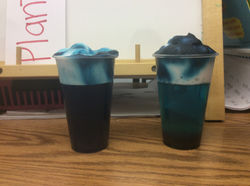
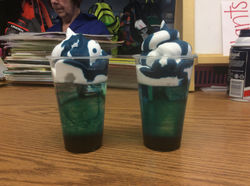
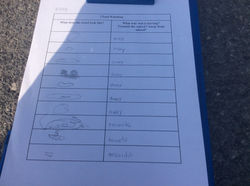
Justification: For my science lesson, I taught over the course of two days - a Tuesday and a Thursday. To begin with, I was not entirely sure how I would keep them engaged on both days as well as was not sure if they would retain what we had talked about from Tuesday to Thursday. Thankfully they remained very engaged throughout both pieces of the lesson. By planning around what they were interested in, I think I was better able to keep their enthusiasm at a high as well as keep them wanting to learn about what we were investigating. Through the video (on password protected page), you can see they were very engaged in the movement of the shaving cream clouds. This got me thinking to alter what we were going to investigate. I showed them Thursday the video, and they all giggled and were very excited about the lesson. While this wasn't an incredibly long range of time, it still gave me the opportunity to learn how students react to lessons spread over days at a time that I am teaching.
Justification: My about me lesson was probably the shortest one I have taught. It was interesting to see how quickly students will work, even for the ones who usually take longer to finish their work. They were engaged and excited about the lesson, even though it was a fast turn around time for what they were doing. I taught another about me lesson during the fall semester, and it proved to be true that the students will work as quickly or as slowly as you want them to, you just have to let them know about time constraints (i.e., give them the five minute warning).
A6. Instructional resources
The teacher selects, adapts, and/or creates appropriate instructional resources and materials, including instructional technologies.
Evidence: See Teachers Pay Teachers attachments and cooperative learning review centers as well as chapter 2 review and biological science unit 1.
Justification: I think it's important to adapt what you are using in the classroom so that you know as much as you can about the tasks you are giving students to do. It also helps to know what you are providing the students time to do, so when they ask questions, you can answer the questions. I think that it is also important to create appropriate instructional resources and materials so that you can provide for your students the best you can. I did this with my KLEWS chart so students could answer questions and fill in what they learned during the lesson. I think it's helpful to make sheets for yourself so that you can customize them to fit your students' needs as well as fit your needs for the lesson.
A7. Preparing an appropriate learning environment
Teacher plans the learning environment.
Evidence: See attachments.
Justification: Throughout my time at Standing Stone this fall, I have learned a lot about my teaching practices as well as more about the children I am working with. During preparation of lessons, I have been able to process what my students needs are in depth and how I can help them reach that goal. For example, I have created two cooperative learning lessons with centers in math. I used these centers to help me better understand what students work well together as well as to review skills with the students that they needed to be refreshed on. With the help of Mrs. Kidd, I was able to scaffold the activities for certain students and work with them one-on-one while other students worked together to solve problems. This created an inclusive and nurturing environment. The different activities provided a stimulating and academically challenging learning environment, which helped keep them on task as well as learning while having fun.
Evidence Pieces
Go Math! Chapter 4, Lesson 3
Go Math! Cooperative Learning Chapter 2
Go Math! Chapter 2 Review Centers
 |
|---|
 |
 |
 |
Biological Evolution Unit - Lesson 1
Biological Evolution Unit - Lesson 2
Schoolwide Lesson Plan 1
The Proposal - Science Unit
The Lorax Writing Prompt
Go Math! Chapter 1, Lesson 8
Go Math! Chapter 2, Lesson 3
Biological Evolution Unit
About Me Lesson, Spring 2016
About Me Lesson, Fall 2016
Science Methods Course Lesson Plan
Go Math! Chapter 2 Review Centers, TeachersPayTeachers
 |
|---|
 |
 |
 |
 |
 |
 |
 |
 |
 |
 |
 |
 |
 |
 |
 |
 |
 |
 |
 |
 |
 |
 |
 |
 |
 |
 |
 |