Domain C: Analyzing Student Learning & Inquiring into Teaching
Domain C: Analyzing Student Learning & Inquiring into Teaching
C1. Monitoring and adjusting instruction
The teacher monitors and adjusts instructional and assessment strategies during teaching.
Throughout lessons, I have realized when they start going south or when students start disengaging. Once, in a math lesson using greater than or less than, I made the students get up and act like crocodiles/alligators to get them more engaged in comparing numbers. While I don't have video evidence of this, I know that I can improve teaching whilst teaching by alternating what the lesson plan is depending on how the students are doing that day.
I taught a writer's workshop lesson one day, and it wasn't incredibly successful. However, I did learn from my mistakes and used the lesson as a turning point. I now know what I really need to cover with the students and what they really need the most help with in their writing. I kept a tally on a Google doc, which can be found here: https://docs.google.com/document/d/1YyD86frqsKtkI6q3dLHED1-eCbD5Dr5bIttmwbnqfig/edit?usp=sharing
C2. Analyzing assessment data
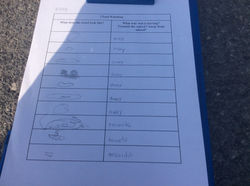
Through my math assignment 4 and 5, I was able to use smaller groups of students to assess what they were learning and what they were still confused on. Through assignment 4, I was able to analyze data from three students and their understanding of vertices, 3D shapes, edges, and faces. While they were confused at first, they ended up understanding as time went on. I think this was a valuable opportunity for me to learn how to assess student data in smaller groups. For assignment 5, I worked with one individual student, and it was very helpful to see what she knew about math and gave me some background knowledge of her confidence level in mathematics. I also was given the opportunity to work with a small group of students during other math talks in class. While I didn't plan for this and it was given to me shortly before I gave said talk, I was able to see what the kiddos were still confused on and what they were getting about 3D shapes. Another way I used sub-groups of students was to shape my lesson based on my
science preassessment.
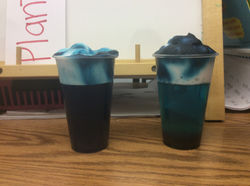
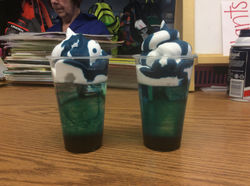
I have also been able to assess whole group data too, to see what students understood and what students were not getting it yet. For example, I used my science lesson data to understand what students were understanding what was going on with the clouds moving. I think that, while they were all pretty much on the same page, they were all able to learn something together throughout this process and were able to learn together, since they were in partners. They came up with excellent thoughts on why clouds move and were able to tell me based off their observation what way the clouds move. I know that this was an ideal situation, where everyone was on the same page, but I think that from this I can learn how to better assist students when they aren't on the same page.
Student assessment is crucial to being able to group students and understand where they stand after a lesson is taught. I use the data from my assessment to decide where to start next. It is important for students to be able to understand
before moving forward because so much builds off of each other. I do this in math daily, by checking their workbooks. I also did this for my science lesson for DI block in the spring of 2016. I used my pre-assessment to test what the students' knew, and then I based my lesson to meet their needs. I use the data from student assessment to drive the way I group my students for cooperative learning activities. XtraMath and Front Row have capabilities to send reports to teachers as well as have a report via their website available whenever you go on (see screenshots attached). I used this information to partner students together for workbook work after I am finished teaching the lesson. This helped me to realize who works well together and who does not, which led me to be able to group students into groups of 4-5.
C3. Using data to evaluate teaching
After teaching my lesson on The Lorax, I used the feedback I received from my supervisor to improved my lesson. Instead of discussing materials and the writing prompt at the beginning, before reading the story, I discussed them and told them what they were writing about after reading the story, which seemed to help them write more efficiently. I could see this not only by them turning in their prompts faster but by seeing how passionate they were about where they wanted to go and why. They wrote and drew more and were eager to hand them to me for me to see
them.
For my about me lesson, I used the request comments section of lesson planning via Taskstream to receive feedback from my supervisor. I was able to use this to help create the lesson and make it better for myself and the students. With the proper feedback, I was able to make my lesson more engaging as well as learn exactly what each section of the form means and how to fill it out.
 |
|---|
 |
 |
 |
 |
 |
 |
 |
 |
 |
 |
 |
 |
 |
 |
 |
 |
 |
 |
 |
 |
 |
 |
 |
 |
 |
 |
 |
Math Methods Assignment 4
Science Methods Lesson
The Lorax Read Aloud, Supervisor's Notes